Snoring is common, and it is rarely just one person's problem. In a small HDB bedroom, one person's snore becomes two people's bad night. The good news: a few small changes to how you sleep are easy to try.
This guide covers sleep posture tips for snorers, plus bedroom habits that make nights more comfortable. We also show where a supportive contour pillow such as the Melara Air Pillow can fit in. It is general information, not medical advice.
What is the best sleeping position for snorers?
For most people, the answer is on your side. The NHS lists sleeping on your side as a self-help tip for snoring, and suggests that a pillow or a bed wedge can help you stay there. When you lie flat on your back, the soft parts of the throat can relax and drop back more easily. Side sleeping tends to avoid that.
| Position | What to know for snorers |
|---|---|
| Side | Most often suggested. Needs a pillow that fills the gap between ear and shoulder |
| Back | Often a harder position for snorers. A pillow that supports head and neck may help comfort |
| Stomach | Can strain the neck if the head is turned or raised. A low, soft support helps |
How do I keep my head and neck in line?
Posture is not only about which way you face. It is also about alignment: your head, neck and shoulders resting in a comfortable line. If your pillow is too flat, your head drops. If it is too tall, your chin tucks toward your chest. Neither feels good, and both can make you toss and turn.
- Side sleepers: your pillow should fill the space between your ear and your shoulder so your head stays level.
- Back sleepers: support the curve of your neck, and keep your chin from tilting up or tucking down.
- Everyone: leave room for your shoulder. A pillow that pushes your shoulder up is not helping.
Not sure which height suits you? Our guide to choosing an ergonomic pillow has a simple checklist.
Can a contour pillow make side sleeping easier?
It can make staying on your side more comfortable. The Melara Air Pillow is a butterfly-style contour pillow. According to the manufacturer, it is designed to align your head, neck and shoulders, with front wings for support, an arch for the shoulder, a central core with chin support and an arm rest area. The manufacturer also says it is designed to help keep airways open and to help reduce snoring at the source.
That is the maker's description of the design, and individual results vary. Think of it as a comfort tool for good posture, not a treatment. If you want to try it at home, see the official store offer.
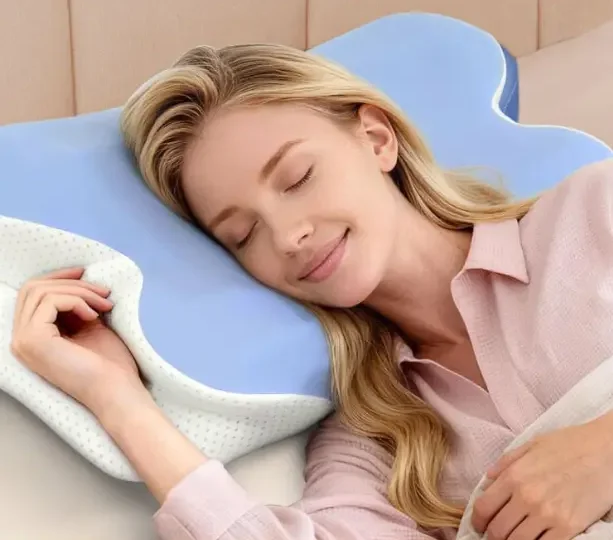
Support your head, neck and shoulders for calmer nights
Get Melara Air Pillow at the Official Store Risk-free trial · Money-back guarantee · Ships to SingaporeWhat bedroom habits help in Singapore?
Our nights are warm and humid, and that changes how we sleep. Small habits can make a real difference to comfort.
- Keep the room cool and fresh. Aircon at a comfortable setting or a fan on low helps you settle.
- Keep the bedroom clean. Wash bed linen regularly and dust shelves and fan blades.
- Keep a steady bedtime. A regular routine makes sleep deeper.
- Dim the lights and put the phone away. A calmer room helps you stay asleep.
- Choose a cooling pillow. A cooling layer and breathable design are made to help heat disperse.
Do late meals and alcohol matter?
The NHS suggests limiting alcohol as a self-help tip for snoring. It also says to avoid sleeping pills, which can sometimes make snoring worse. Late supper is a very Singapore habit, with a bowl of noodles after a late shift or supper at the kopitiam. A heavy meal close to bedtime can make lying down less comfortable, so an earlier and lighter dinner is a simple thing to try.
- Finish dinner a few hours before bed if you can.
- Keep alcohol light, especially close to bedtime.
- Talk to your doctor before changing any medicine. Do not stop prescribed medicine on your own.
Does weight make a difference?
The NHS lists losing weight, if you are overweight, as a self-help tip for snoring. It also lists stopping smoking. These are bigger changes, and they take time. A doctor or dietitian can give advice that suits you. Small steps count: a short walk after dinner, or taking the stairs instead of the lift.
What can I do about a blocked nose at night?
A stuffy nose can make nights harder, and many people in Singapore deal with dust, haze or aircon dryness. Here are gentle habits worth trying.
- Keep the room clean. Dust and mites do not help.
- Clean the aircon filter as the maker advises.
- Drink water through the day. Dry air can feel harsh.
- Wash bedding often in hot, humid weather.
If your nose is blocked most nights, a doctor can help work out why.
What if I share a bed with a snorer?
Be kind, and be practical. Snoring is not anyone's fault. The NHS suggests that a partner can try earplugs if the snoring is keeping them awake. For the snorer, side sleeping and a supportive pillow are a good place to start. You can also try these ideas together.
- Talk about it in the morning, not at 3 am.
- Try side sleeping with a supportive pillow for a week.
- Tidy up the bedtime routine with an earlier supper and lighter alcohol.
- Check in after a week. What helped? What did not?
Sharing a bed? A guide on how to choose a pillow for each person can help, and our Melara Air Pillow guide for snoring and neck pain goes deeper on that topic.
When should I see a doctor about snoring?
Snoring is often harmless, but not always. The NHS advises seeing a doctor if lifestyle changes are not reducing your snoring, if snoring significantly affects your life or your partner's, or if you:
- feel very sleepy during the day,
- stop and start breathing during sleep, or
- make gasping or choking sounds at night.
These can be signs of sleep apnoea, which can be serious if left untreated. A pillow is not a medical device, and it is not a replacement for a check-up. In Singapore, a visit to your GP or polyclinic is a good first step.
What does a good night routine look like?
Here is a simple example for a busy Singapore weeknight. Nothing fancy, just steady habits that add up.
- Early evening: have a lighter dinner, and take a short walk if the weather is kind.
- One hour before bed: dim the lights, switch the aircon or fan to a comfortable level and put the phone down.
- At bedtime: lie on your side, with your head, neck and shoulders resting in a line on a supportive pillow.
- If you wake on your back: gently roll to your side again. A body pillow or a bed wedge can help you stay there.
- In the morning: note how you feel, and how your partner slept. Small notes make it easy to see what helps.
Be patient. New sleep habits can take a couple of weeks to feel natural, and that is normal.
Frequently asked questions
What is the best sleeping position for snorers?
Sleeping on your side is the position most often suggested. The NHS lists side sleeping as a self-help tip, and a pillow can help you stay there.
Can a pillow help with snoring?
A pillow that supports your head, neck and shoulders can make side sleeping more comfortable, so it is easier to stay in a better position. According to the manufacturer, the Melara Air Pillow is designed to keep the airway open and align the spine. It is not a medical treatment.
Do late meals and alcohol affect snoring?
The NHS suggests limiting alcohol as a self-help tip for snoring. Many people also find a heavy meal close to bedtime makes sleep less comfortable, so a lighter, earlier dinner is a simple habit to try.
Does weight affect snoring?
The NHS lists losing weight, if you are overweight, as a self-help tip for snoring. Speak to a doctor for advice that suits you.
What if my partner and I share a bed?
Try side sleeping and a supportive pillow for the snorer. The NHS also suggests the partner try earplugs. Talking about it kindly, and trying changes together, tends to help both of you.
When should I see a doctor about snoring?
See a doctor if lifestyle changes are not helping, if snoring affects your life or your partner's, or if you feel very sleepy in the day, stop and start breathing in your sleep, or make gasping or choking sounds at night. These can be signs of sleep apnoea.
Source
NHS, Snoring (self-help tips and when to see a GP).
More guides
Last reviewed October 15, 2026. This guide is general information and not medical advice.